WINTER 2025
Please scroll down the page to discover what we have discovered
Content to date:
Moules a la Crème - L'Auberge de Peintures - Domaine Didier Lemorton -
MOULES A LA CRÈME
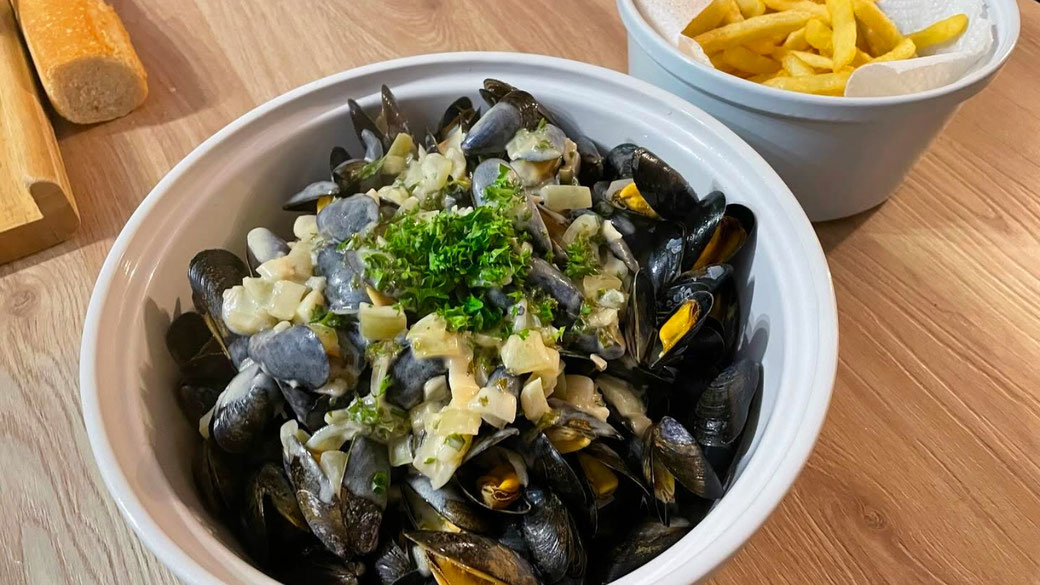
Along the French coastline you will often see Moules for sale in restaurants. Some are served better than others, my bug bear is that often the mussels are not cleaned satisfactorily and you find the sauce at the bottom of the dish, grey and gritty. So doing them at home yourself, you can make the effort to throughly clean the mussels plus I produce the sauce separately so when the mussels are steamed open they don't deposit the grit and dirt into your sauce. Your sauce is then perfect for dipping crusty bread into.
Mussels in France are generally available all year, however the best months to buy fresh mussels from the market is when there is an 'R' in the month. (September to April)
Cleaning Mussels -
Cleaning mussels is easy it just takes a little time, but well worth the effort. There are many myths re mussels and how they can make you violently ill. But by checking and removing any bad mussels you will be fine.
1. Only buy fresh mussels (not imported frozen ones)
2. Buy in the middle to the end of the week. Mussels for sale on a Monday were collected the week before.
3. Place all the mussels in a bowl of cold water.
4. Go through each individual mussel, discarding any with a broken shell.
5. Remove the beard (this connects it to the rope when growing in the sea) plus scrape off any barnacles with a knife.
6. Floating mussels are perfectly good, they just have air trapped in them.
7. Mussels which are slightly open are also fine.
Having inspected every shell, rinse a few times in clean cold water. They can then sit in cold water all day until ready to cook.
Some people sprinkle flour over the surface, this they say makes the shell open to eat, enabling it to deposit any grit. But I don't bother with this, but keep rinsing the shells until the water is totally clear and clean.
You will need approx. 750gms of mussels per person.
Making the sauce -
Saute a large onion until soft in olive oil and a little white wine. When onion is nearly soft add 4 cloves of finely chopped garlic and saute. When onion and garlic is translucent and soft, add a 1/2 litre of chicken stock and 1/2 bottle of white wine and simmer until reduced in half. Once reduced, let cool slightly and add 250cl of full fat cream or crème fraîche. Season with salt and pepper, finally adding a handful of chopped parsley. This can be made in advance and re-heated when ready to serve.
Steaming the Mussels -
In a large cast iron pot, add a chopped onion, 2 chopped cloves of garlic and the rest of the bottle of white wine. Drain the mussels and add to the pot once the white wine is boiling. Place lid on top to enable the mussels to steam. Every couple of minutes using a slotted spoon, turn the mussels in the pot so they open evenly. The mussels will have opened after about 5 minutes being steamed. If not keep stirring them for a couple of more minutes. Once you see the shells are open they are ready to serve immediately.
To serve -
With a slotted spoon remove the mussels only and place into warmed bowls. Leave the onion, garlic and white white in the pot. Once all the mussels are removed you will see the liquid in the bottom of the pot is grey and gritty. Discard this.
Pour your cream white wine sauce over the mussels and sprinkle fresh parsley over the top.
Serve with some nice crusty bread and frites.
L'AUBERGE DES PEINTRES - Saint Cénerie-le-Gérie

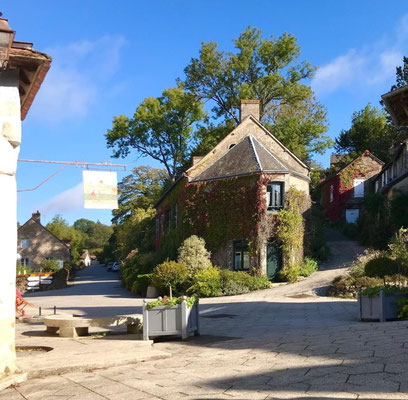
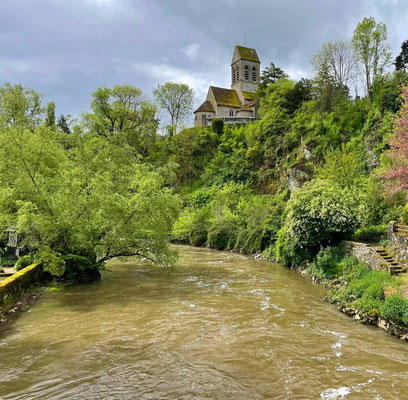
Recognised as one of Frances prettiest villages is Saint-Cènerie-le-Gèrie , located on the River Sarthe in southern Normandy.
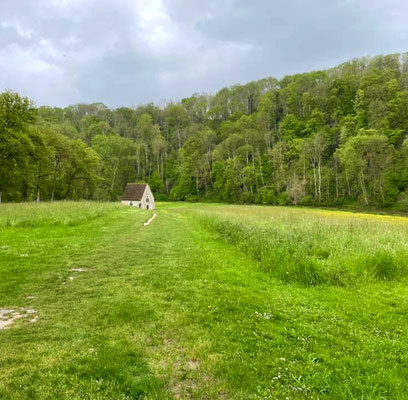
The scenic village has many old stone houses and a four arched bridge over the river. The 11th century church overlooks the river and has attracted artists and tourists for many years. There are narrow streets to wander round with many artist studios and craft shops in which you can visit. Beyond the church the track leads you towards the meadows and the 15th century chapel which is said to have been built by Saint-Cènerie. This has attracted many artists to visit since the 19th century to paint the chapel which stands alone in the bend of the river.
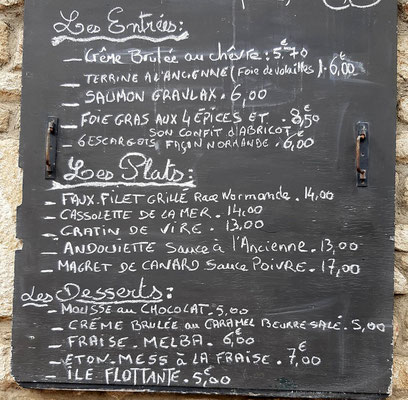
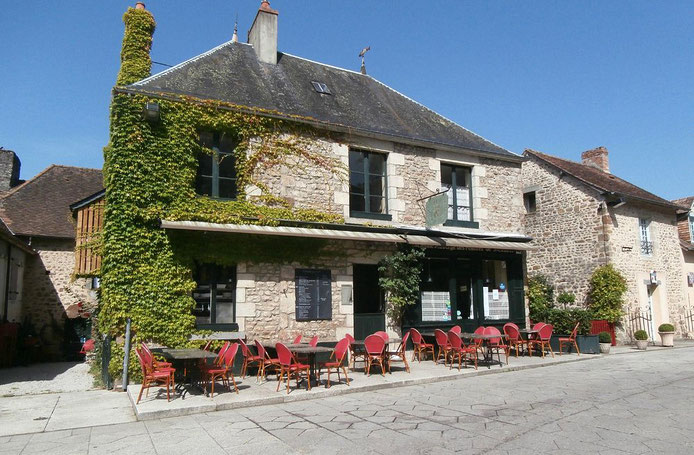
We recommend Saint-Cènerie-le-Gèrie to all our guests as a great place to visit and suggest if wanting a meal to eat at L'Auberge des Peintres. This small restaurant with interior or terrace dining is in the centre of the village. Family run offering traditional inexpensive French bistro menu for lunch and dinner. We have eaten here a few times and have always enjoyed their food and the friendly welcome they offer. In high season would recommend making a reservation, as popular with visitors to the village.
L'Auberge des Peintres
Lieu Dit le Bourg, 61250 Saint-Cènerie-le-Gèrie
Tel: 02 33 26 49 18
Wednesday - Monday 10h00 - 23h00
Tuesday Closed
Les Entries - from 6.00€ Les Plats - from 13.00€ Les Desserts - from 5.00€

DOMAINE DIDIER LEMORTON - Calvados Domfrontais

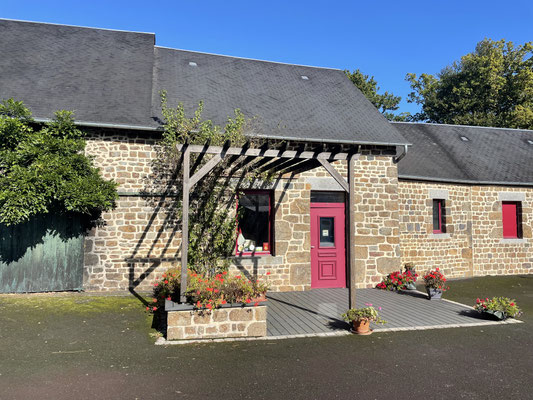
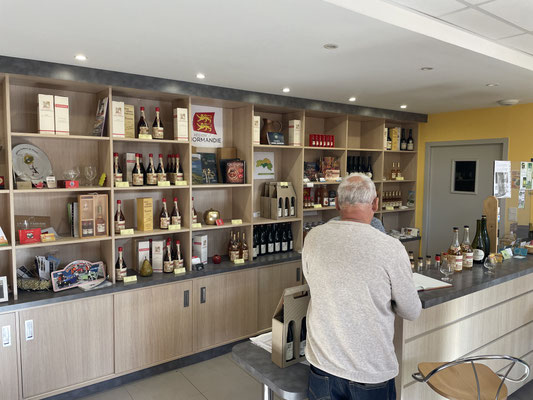
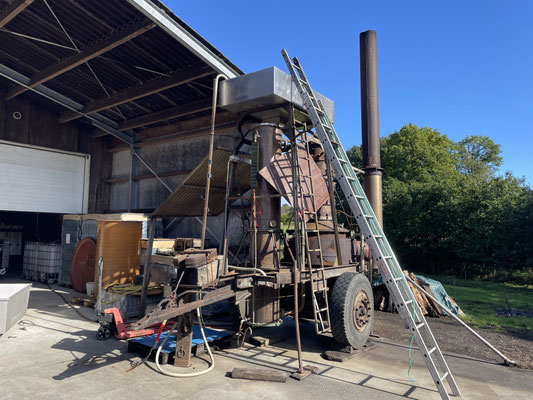
Not far from us is the farm of Didier and Martine Lemorton just outside the medieval city of Domfront. The family for 3 generations has been highly recognised for their cider and calvados Domfrontais. The farm with its visitors shop is open daily and if visiting in autumn you can see the process of harvesting the apples and pears, crushing, pressing and distilling. You can visit daily, but we suggest making an appointment at harvest time. When visiting Didier and Martine are happy to show you and explain each process in the production of their ciders and calvados, you can also see the large oak barrels in which the calvados is aged. The farm and orchards cover a hundred hectares with forty different varieties of pear and apples. During the autumn harvest, ripe fruits fall naturally to land on soft grass under the trees before being collected and taken to the press.
Didier and Martine produce their Calvados Domfrontais with a precise date of distillation which is printed on the label.
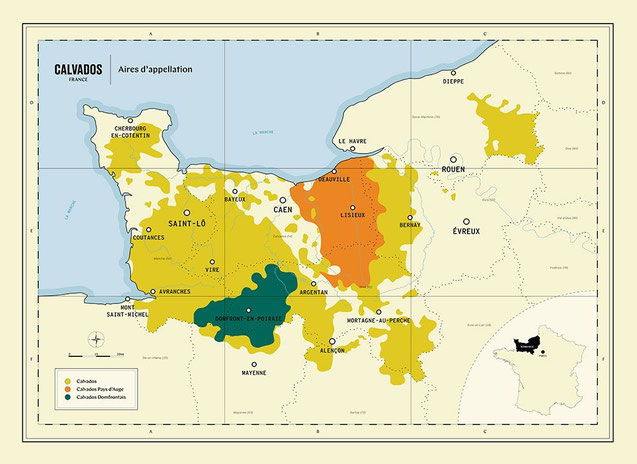
To qualify for the title 'Appellation Origine Control Domfrontais' the calvados must contain a minimum of 30% pear juice. Unlike other AOC Calvados in Normandy which are only apple based. The calvados produced by Didier has 70% of pear juice and 30% apple juice.
This local produce is typical of the Domfront Bocage in the Orne area where the mature apple and pear trees flourish.
Visiting the farm you can taste their different apple and pear ciders, pommeau plus young and aged calvados. You are able to purchase bottles of all their produce, their oldest calvados is 60 years old and was distilled by Didier's grandfather and costs 350.00€ a bottle. Lamorton Calvados is exported around the world and can be found in many Michelin * restaurants in their wine menus as an digestif after a meal. When we were last there we met a regular Japanese buyer who was making his order for distribution in Japan.
Domaine Didier Lemorton
La Baillée Fêtu 61350 Mantilly
Tel: 02 33 38 70 90
www.lemorton.com
Open Daily 9h00 - 19h00